Blog
Lead of the Week: Logistics Questions Become a Scheduled Sample
October 5, 2026 · Angel Roman
Most operators read a reply full of questions as lukewarm. The enthusiastic reply gets the fast response, and the one asking about menus and delivery waits.
That is backwards.
Situation
A regional restaurant group with several locations was running AI-powered automated outreach on LinkedIn. One message reached a prospect at a local business.
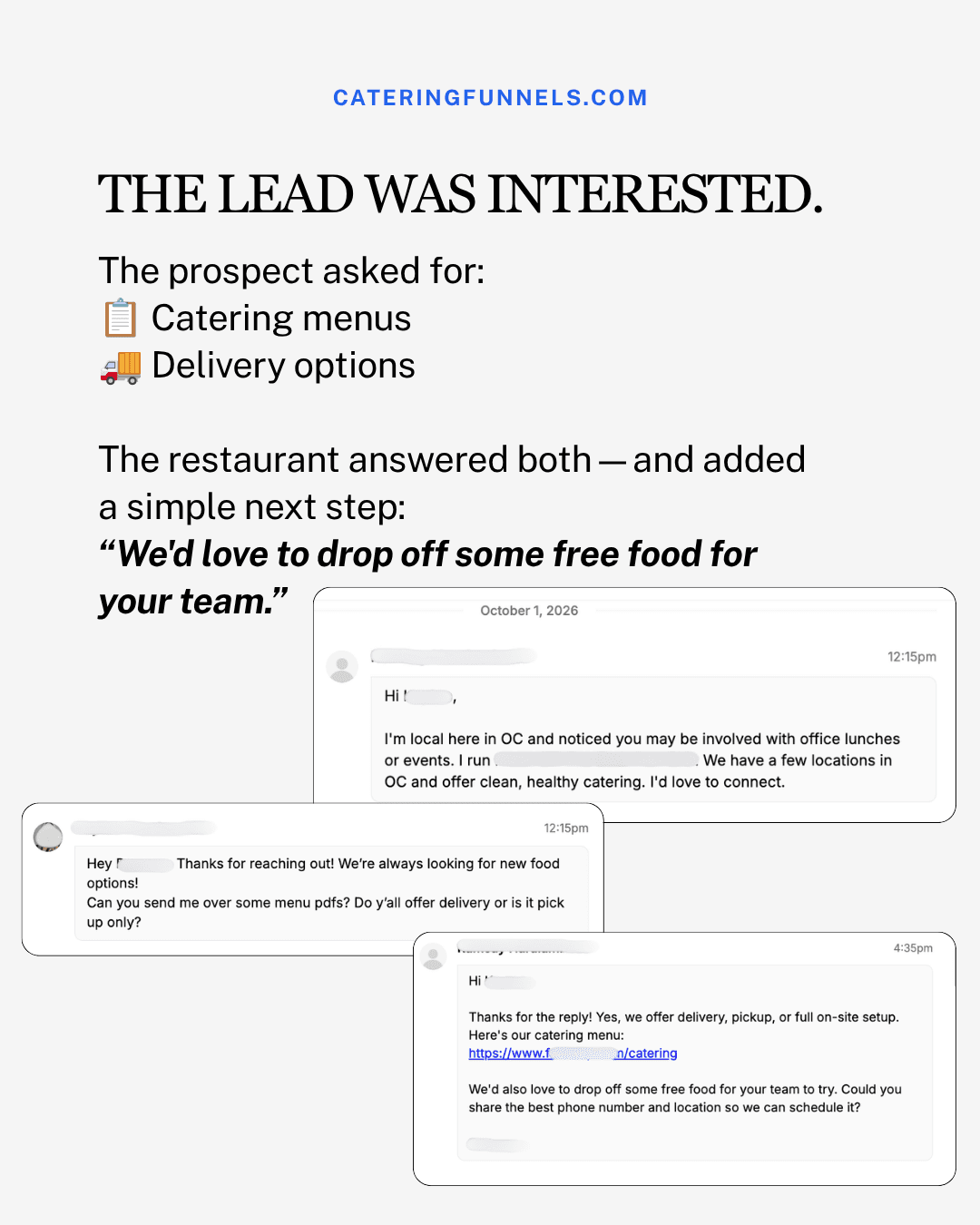
The message introduced the group and asked to connect with someone involved in office lunches or events. No pricing, no offer.
What Happened
The prospect replied that her team is always looking for new food options. Then she asked two specific questions. Could the restaurant send over menu PDFs, and does it offer delivery or is it pickup only.
No mention of an event. Two logistics questions.
What the Restaurant Did
It answered both questions completely and attached one next step.
The reply confirmed the restaurant offers delivery, pickup, or full on-site setup, and it included the catering menu. Then it offered to drop off free food for her team to try, and asked for the best phone number and location so the drop-off could be scheduled.
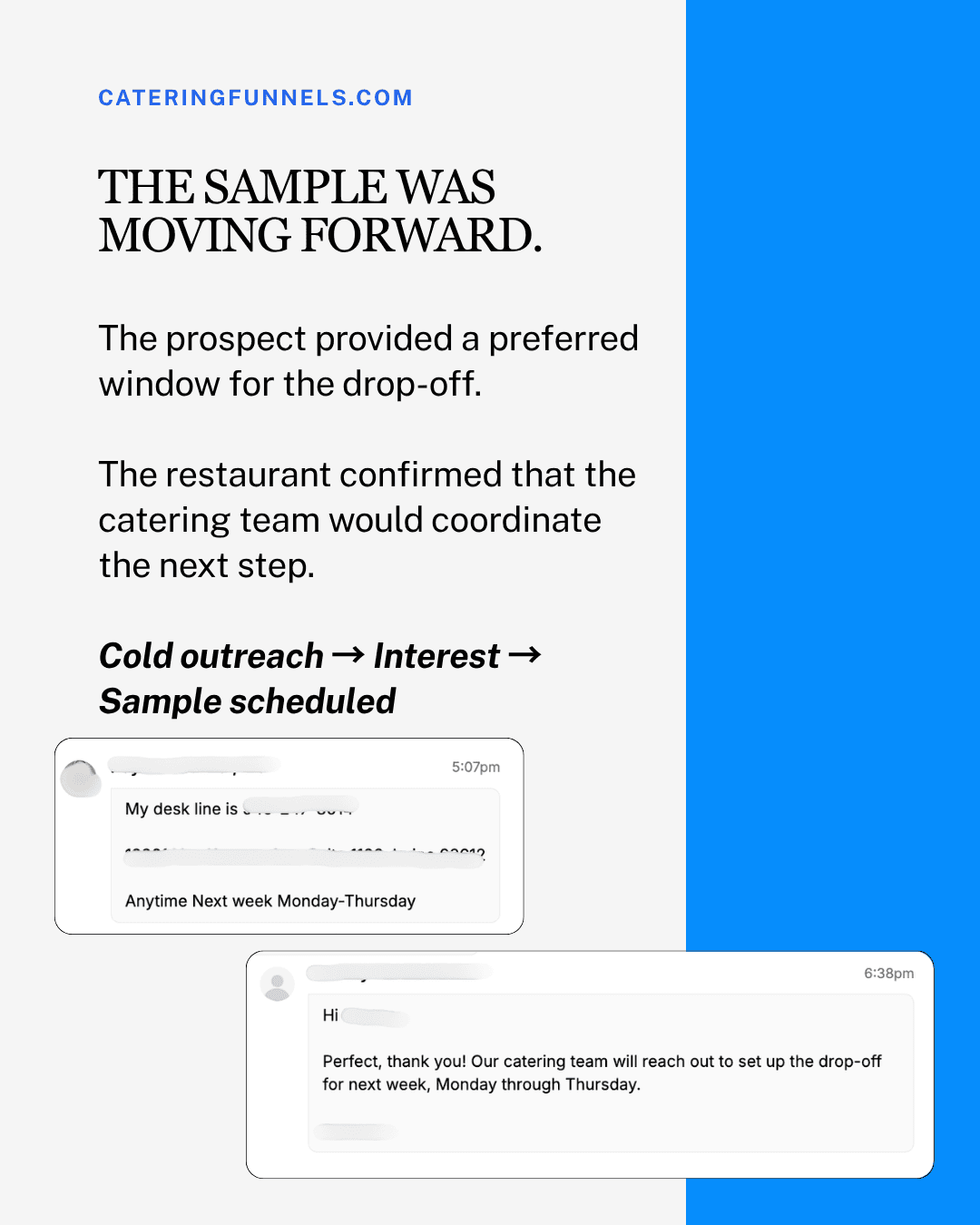
The prospect came back with a direct desk line, an address, and a four-day window the following week. The restaurant confirmed its catering team would coordinate the drop-off inside that window.
Result
A complimentary sample drop-off scheduled, with a confirmed window and a direct contact at the prospect's office.
Confirmed: she supplied a desk line and an address, and the restaurant has a four-day window to deliver. Not confirmed: any order. The food is complimentary, nothing has been placed, and no revenue figure exists.
It goes on the wins index as an opportunity, revenue blank.
Why Are Logistics Questions Buying Questions?
Because they are the questions someone asks when working out whether you can actually serve them.
A polite prospect says the food looks great and leaves it there. A prospect who asks for menus and delivery terms is checking what you make and whether it can reach her office. Those are the two facts she needs before she can order or recommend you to whoever does.
The reply did not sound excited. It sounded like someone qualifying a vendor, which is the better signal.
What This Means for Other Operators
Answer every question in the reply, then attach one concrete next step.
The restaurant's response did three things in one message. It answered the delivery question in full, with all three service options. It sent the menu instead of promising to. And it proposed one specific action with one specific ask: free food for the team, and the phone number and location needed to schedule it.
The prospect handed over a desk line, an address, and a window. Nobody had to ask twice. A complete answer plus a clear next step moves faster than any follow-up sequence. Many of the reasons catering inquiries go cold come down to partial answers that leave the prospect with one more question to ask.
A scheduled sample is the entry point to the corporate catering flywheel. The full approach is in the guide to getting corporate catering clients.
Catering Funnels is a done-for-you lead generation and automation platform built for restaurants with active catering operations. Follow Catering Funnels on LinkedIn for weekly wins and outreach breakdowns from real catering operations.
Want help applying this to your operation?
Book a strategy call.
Book a strategy callNot ready for a call? Get the free Corporate Catering Playbook. No email required.