Blog
Lead of the Week: Outreach Uncovers a Buyer With Recurring Office Events
September 22, 2026 · Angel Roman
A prospect who orders catering four or five times a year looks like a small account. Most operators treat her like one, and that is the mistake.
Situation
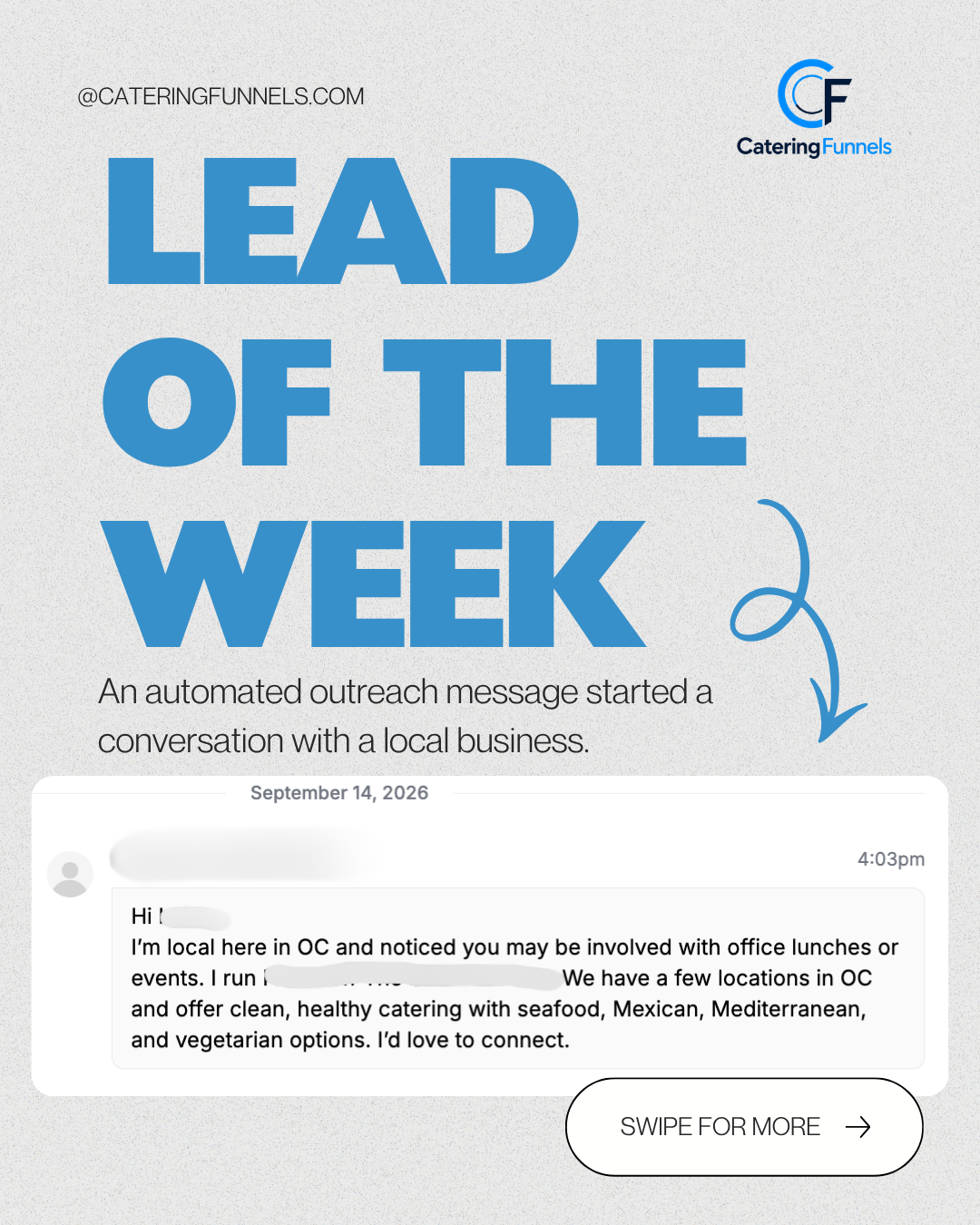
A regional restaurant group with several locations was running AI-powered automated outreach on LinkedIn. One message reached a prospect at a local business.
The message introduced the group, described its catering range, and asked to connect with someone involved in office lunches or events. It asked for the right person, not for a meeting.
What Happened
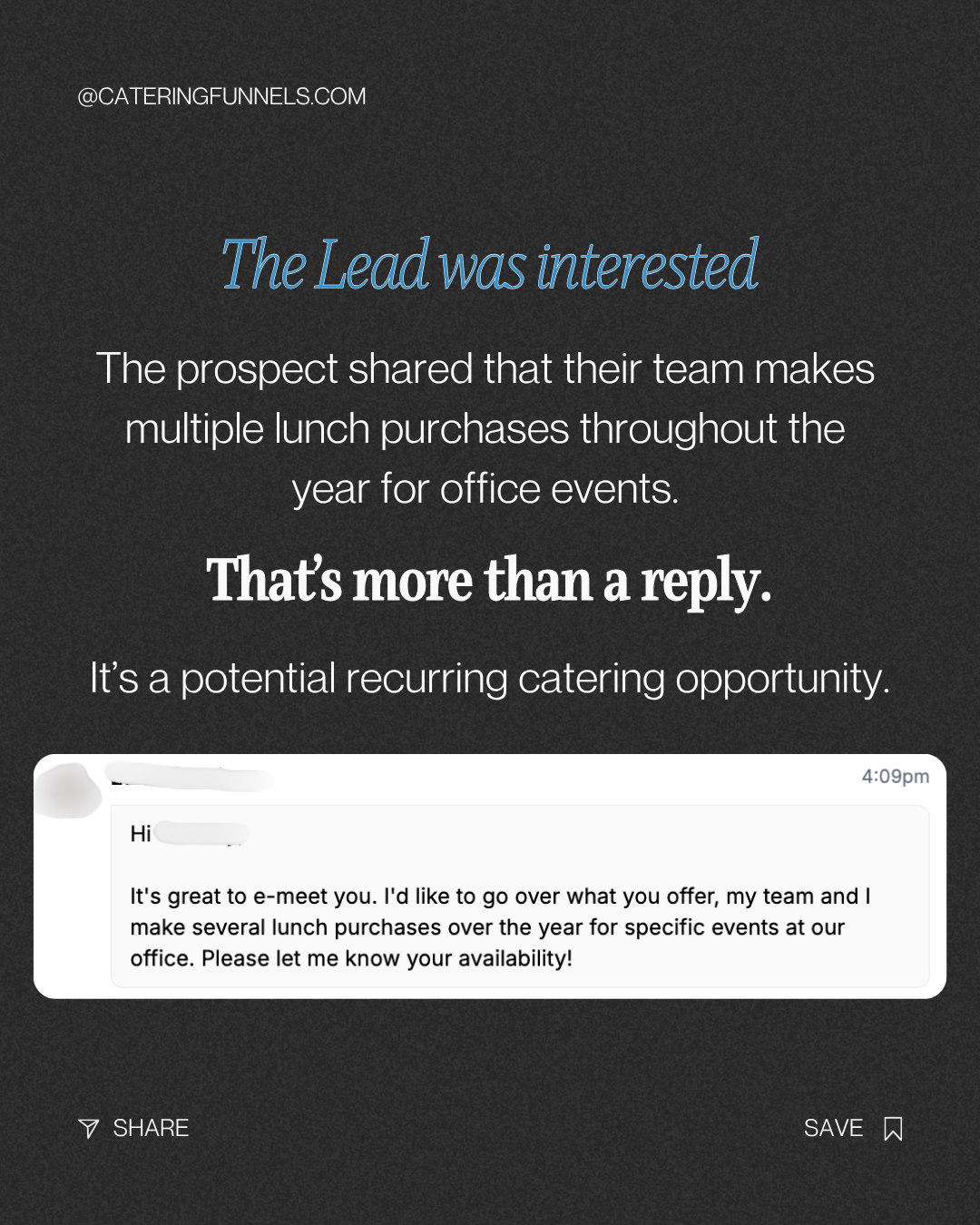
The prospect replied warmly and said she would like to go over what the restaurant offers.
Then she volunteered the detail that makes this a lead worth working. She and her team make several lunch purchases over the year for specific events at their office. She asked for the restaurant's availability.
Nobody asked how often she buys. She offered it.
What the Restaurant Did
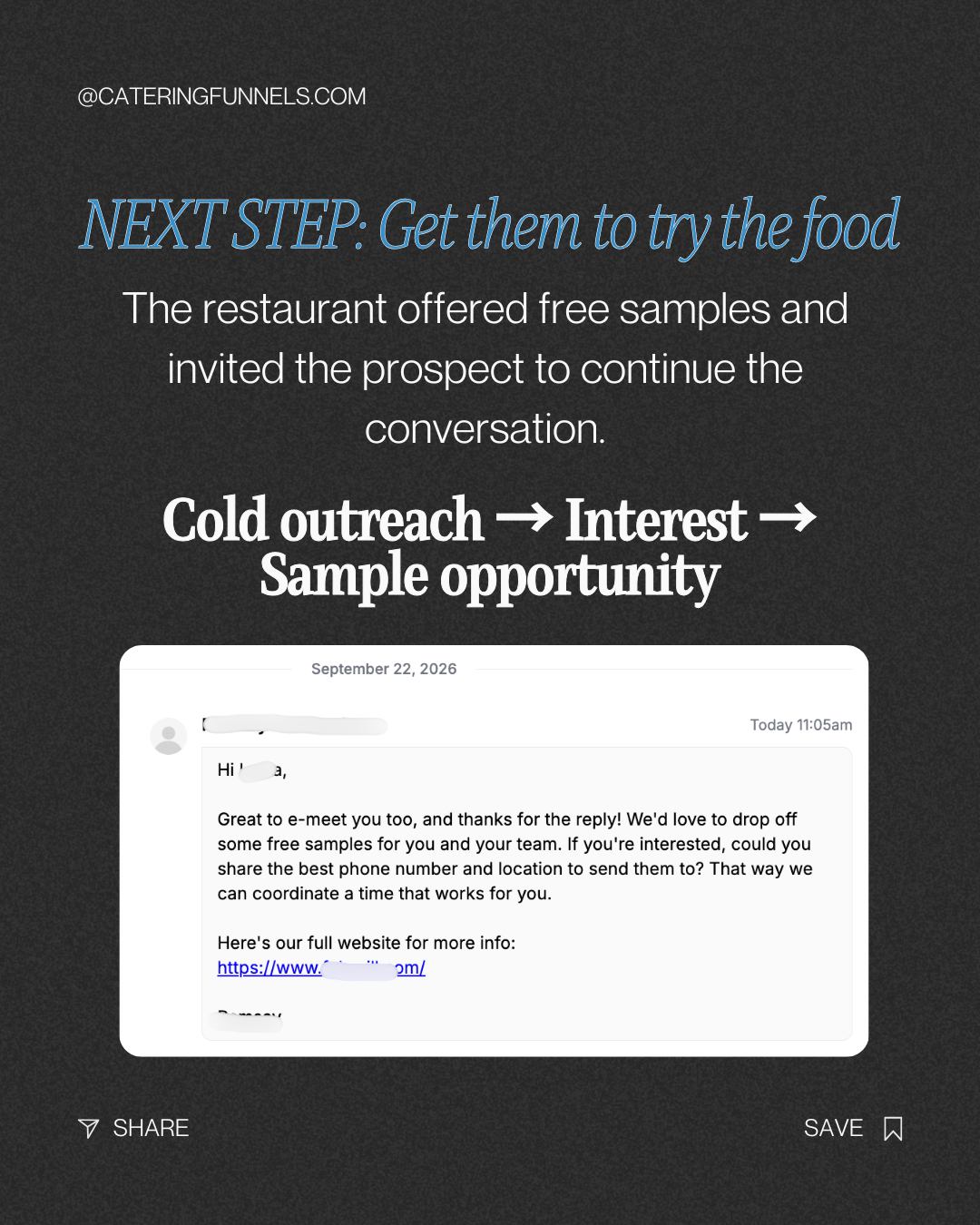
It skipped the presentation and offered food.
The reply thanked her, offered to drop off free samples for her and her team, and asked for the best phone number and location to coordinate the delivery. It also shared the website.
A prospect who buys for specific events is going to compare options when the next event comes up. Samples put the restaurant in that comparison before the event exists.
Result
A qualified prospect with recurring office-event catering needs, and a sample drop-off being coordinated.
Confirmed: she buys catering several times a year for office events, she wants to see what the restaurant offers, and the samples are being scheduled. Not confirmed: any order. The samples are complimentary, nothing has been placed, and no revenue figure exists.
It goes on the wins index as an opportunity, revenue blank.
What This Means for Other Operators
A buyer who orders four or five times a year is not a small account. She is a predictable one.
Those events are on a calendar. Someone is already planning around them, and someone will source food for each one whether or not this restaurant is in the conversation. The pattern is not weekly, so it is easy to undervalue. But it repeats, the dates are known in advance, and every occasion is a fresh decision about who supplies it.
That last part is the opening. A weekly account has a supplier locked in. An occasional buyer re-decides each time, which means the operator who is already in her rotation gets considered by default.
Getting there early matters more than the size of any single order. If the samples land before the next event is being sourced, the restaurant is a known option when the planning starts. If they land after, it is competing against whoever just got the order.
Four events a year from a buyer who already knows you is worth more than one large booking you had to chase.
Catering Funnels is a done-for-you lead generation and automation platform built for restaurants with active catering operations. Occasional buyers like this one are where the corporate catering flywheel starts, and turning them into a recurring office lunch account is its own discipline. The full approach is in the guide to getting corporate catering clients.
Follow Catering Funnels on LinkedIn for weekly wins and outreach breakdowns from real catering operations.
Want help applying this to your operation?
Book a strategy call.
Book a strategy callNot ready for a call? Get the free Corporate Catering Playbook. No email required.